Varisha media 2
Drama as a genre
The plots of these serious stories are based on real-life occurrences that occur frequently. The realistic characters in these films and TV shows are either at odds with nature's forces or with themselves or other people. Character development and these individuals' life arcs are typically the focal points. Due to the fact that character-driven stories are the foundation of most television shows and films, drama is frequently combined with other genres.
An example of this is the animated short film "The Garden of Words" which focuses on Takao Akizuki, an aspiring 15-year-old shoemaker, and Yukari Yukino, a mysterious 27-year-old woman he keeps meeting at Shinjuku Gyoen National Garden on rainy mornings.

Comedy as a genre
Comedy is a type of dramatic works that are meant to make people laugh, particularly in theatre, movies, stand-up comedy, television, radio, novels, and other forms of entertainment. The tone here is light and satirical and the story always ends well. It dates back to the Ancient Greeks, originating from the comedy literary definition which refers to a medieval story or narrative involving an amusing character that triumphs over poor circumstances, creating comic effects.
An example of a comedy film is "The Mask" , which follows Stanley, a meek bank employee, turns into an eccentric and maniacal green-skinned superhero who can bend reality, after wearing a wooden mask that was created by Loki, the Norse god of mischief.

Combining the two (Dramedy)
It felt like a good idea to combine these two genres. We would have the opportunity to create a humorous story with some poignant elements. We believed it may be an interesting method to amuse people while also influencing their thoughts and emotions regarding the character. We therefore made the decision to produce a short film that combines humour with more profound feelings.
A dramedy is a film or television show that strikes a balance between comedy and drama. Often referred to as a comedy drama, this hybrid genre frequently features credible circumstances, grounded characters, and real-life scenarios. Although the proportion of comedy to drama can change, both are typically present in equal amounts, with neither side taking centre stage.
The film Jojo Rabbit is a great example of this, combining outrageous humor with intense moments of war.

Conventions of Dramedy
Dramedies often cover topics that are familiar to everyone, regardless of their position in life. Serious topics, like divorce, illness, hardship, heartache, and so on, are usually what’s dealt with. Additionally, these topics can be fleshed out and have details added to personalize them.
Technical Elements
LIGHTING

Low key lighting:
This type of lighting creates a dark and moody atmosphere. It is often used in dramas, thrillers, and horror films.

Natural lighting

Practical lighting:
Using light sources that are visible within the frame is known as practical lighting. This kind of lighting can be accomplished using a range of light sources, including headlights from cars, TVs, computers, lamps, and candles. They help in creating a realistic ambiance

High-key lighting:
When we talk about "high-key lighting," that means you're lighting a film, TV show, or photograph with low contrast. This type of lighting is usually used in comedies
SHOTS
The shots in drama films are used to add a more serious vibe to the overall narrative. The following are some conventional shots used in drama films
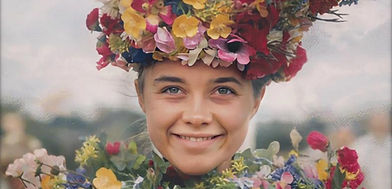
Close ups:
This shot is when an object or a person’s face takes up most of the frame. Close ups have two major uses. It is used to emphasize the expression on a characters face or to make it clear that a certain object is important
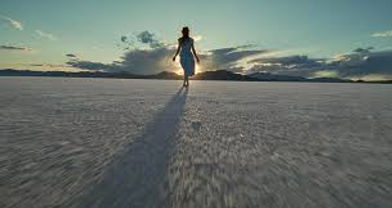
Long shot+ Centralized framing:
A long shot is used to show a person/object in a scene with surroundings. This can be used to show the audience the action in the scene or the location of the scene itself. Centralized framing is a simple yet effective technique that places the subject right in the middle of the frame, making them the immediate focal point.

Low Angle:
A low-angle shot is a film shot taken from a camera angle positioned below the average eye line and pointing up. The effect of the low-angle shot is that it makes the subject look strong and powerful.

High Angle:
A high-angle shot is a camera technique that involves positioning the camera above the subject and looking down. This technique can make the subject appear smaller, more vulnerable, or less significant.
Comedy on the other hand has the complete opposite vibe. The shots it uses are meant to invoke a light hearted and warm feeling within the audience.
The Wait for It…:
With this method, the viewer is forced to wait until the joke is told correctly since the camera remains motionless on the subject. The pause also allows the humour to be revealed gradually over time or with abrupt changes.
The Reveal:
reveals the joke using a movement in which the camera begins in one location and ends at another. It can be any moving camera shot, such as a zoom push, pull, or dolly shot. But the basic notion of this strategy is to expose something by building up the scene, either tiny or vast.
Whip pan (starts at 00:30):
This fun technique pans between the two subjects really fast, allowing the audience to see the juxtapositioning between the two different subjects. The camera movement is fast, fun and upbeat
CHARACTERS
A dramatic film or television show shows us humans at their best and their worst. These kinds of films can be biopics based on real people or fictitious stories. They usually include a strong moral stance or view of the world around them. the characters in these films are always dealing with what life has to offer.
Classic comedies on the other hand may have characters with clear cut personalities with not a lot of depth. So how does Dramedy tackle its characters? It combines the two by giving initially hiding the depth of their characters, but then shows then showing how well fleshed out the characters are in certain instances.
Jojo Rabbit, which is set against the backdrop of the Second World War, is a more recent example of this characterisation approach. The movie addresses the weighty problems of growing up as a child and becoming an adult, in addition to anti-Semitism and extreme prejudice. And it accomplishes this by introducing and removing well-developed and recognisable characters from young Jojo's life.

LOCATION
Any setting works inside a drama. You can have a period piece, something set in the modern-day, on an ocean, in space, the sky is the limit. If there's conflict to be found, then drama will be there. However, most short films tend to stick to one or two sets because they don’t have time for set changes.
An example of this would be the set of 'The Big Shave'. The movie was shot in a singular bathroom set.

SOUND
Despite their undeniable significance, sound effects in film are frequently disregarded. Watching a movie without sound effects would be lifeless and boring for audiences - not at all enjoyable! These auditory cues help even the most visually spectacular movies bring their stories to life.
Various films wrote songs for their productions, describing various scenarios—from a joyous moment to a sad one in which a character is experiencing heartbreak—so that the audience might learn more about each character in depth. Small filmmakers may lack the resources and personal taste to write a song specifically for a short film.
Certain kinds of music and sound effects are employed in scenes to build drama. For instance, there are footsteps, glass breaking, screams, and several other sounds. Conversely, music is frequently featured in dramatised films. This is prominently seen in the ending of 'The Whale' where the music becomes louder when the emotions overflow.
In comedy films, exagerrated sound effects and laugh tracks are highly common and are used to engage the audience and lighten their emotions. The below clip from the TV show '"Friends" demonstrates the use of a laugh track.
EDITTING
Eyeline match cut:
An eyeline match is a filmmaking and editing technique that informs the viewer to what the character sees.
Fade in and out:
A fade is a subtype of dissolve transition that gradually moves to or from an image to or from black. Fades are often used at the beginning/end of movies.
Non-technical Elements
NARRATIVE STRUCTURES
Narrative structure is the foundation of storytelling, an enthralling art form in the magical realm of film. Among the many tools available to film storytellers, one of the most effective is the narrative structure they select.
The narrative structure a filmmaker chooses to use can have a significant impact on how the audience views and understands a story. A clear and simple path is provided by linear storylines, which facilitates the audience's ability to relate to characters and their situations. Non-linear and experimental narratives, on the other hand, frequently provoke debate and a variety of interpretations by evoking a feeling of mystery and reflection.
Character development is also greatly influenced by the story structure. Character development and arcs are typically more clear in linear narratives; however non-linear or experimental frameworks can provide a deeper examination of a character's psychology or the passage of time.
Linear: Film storytelling can be approached in the most conventional and direct way possible with a linear narrative structure. Events happen linearly and in chronological sequence as it unfold. The beginning, middle, and end of the story align in a coherent sequence, allowing the audience to follow a clear cause-and-effect relationship. Most old Disney princess movies use this narrative, like Cinderella(1950)
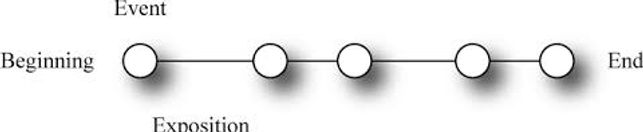
Nonlinear: On the flip side, non-linear narrative deviates from the standard chronology. The narrative is woven through a broken timeline, showing things from several characters' points of view or out of chronological order.
Non-linear narratives are frequently used in films like Christopher Nolan’s “Memento.” Such narratives demand active engagement from the audience, challenging them to decipher the storyline and revealing information in a manner that keeps them intrigued.

Circular: A story that ends where it started is known as a circular narrative. Even though the beginning and finish of the story seem to be fairly similar, the main character usually experiences a transition as a result of the events that unfold, making them different from the beginning.
Alice in Wonderland and The Chronicles of Narnia. They're both fantasy stories that see protagonists journey into a world and have an adventure. This adventure does change them, but no matter what, the journey ends with them right back where they started. They're on the outside of a magical land, better for their adventure but also standing in the same shoes in which they began.

ANIMATION+ LIVE ACTION
This genre of film combines both live action footage and 2D or 3D animation. Most film makers will shoot the scene first, keeping in mind where the animation elements will go within the frame/ how they will interact with the real life actors and set. Then in the editing phase they will go in and add the animation elements. This makes it look like the animated objects/characters are interacting with the real life actors/objects.
In the extract from who framed roger rabbit, the charcter Jessica rabbit is completely 2D animated and interacting with her audience (real life actors) and the real life objects like the napkin. The actors are playing their part well enough to make it look like Jessica is actually there.
Animation is mainly considered just a medium to portray stories. These stories can be of any genre and follow their typical genre conventions. We can take the example of 'The Garden of Words' as our example again. It follows the life of Takao Akizuki, an aspiring 15-year-old shoemaker, and Yukari Yukino, a mysterious 27-year-old woman he keeps meeting at Shinjuku Gyoen National Garden on rainy mornings. Moreover, it makes use of closeups to really emphasize the characters expressions and important objects like the shoes Takao makes for Yukari. Many stories rely on inner monologues and thought expositions to help the audience understand the inner thoughts of characters, but Shinkai shied away from that in The Garden of Words (though not in his other works), which is more challenging for the audience, but keeps more mystery in our personal understanding of the character. This is much more similar to how we interact with people in real life, thus integrati ng this animated world into reality seamlessly. Overall the movie does indeed utilize all the conventions of the Drama genre whilst being completely animated.

CHARACTERIZATION
Characters are central to almost every narrative film. For a movie buff, a well-developed, well-executed character can have a long-lasting effect on pop culture. Characterization is the representation of the traits, motives, and psychology of a character in a narrative. This covers information about sexual orientation, job, and age along with understanding the motivations and viewpoints of a character. These particulars disclose the real personality. Consequently, characterization is a crucial component of narrative.
Authors can develop characterization in two ways: directly and indirectly.
In direct characterization, the author directly describes a character's qualities. Such direct description may come from a narrator, from another character, or through self-description by the character in question. In “Mean girls” we are introduced to “the plastics” through description of their appearances and personalities, telling us that they are characters who might be vain and shallow. This is further supported by their actions on screen
Indirect characterization is when a writer reveals a character’s traits through actions, thoughts, and speech instead of stating them outright. In this scene from captain America, steve may not look like the bravest soldier due to his scrawny appearance but his actions tell us otherwise. He was quick to shield the rest of the camp from the fake grenade while the rest of the soldiers ran, showing the audience his heroism.